
A service dog is trained to perform specific tasks for one person with a disability and can go almost anywhere its handler goes. An emotional support animal is a pet that comforts one person at home. A therapy dog works alongside a professional, like a counselor, to help many people. Only therapy dogs join a treatment session.
People often use these three terms as if they mean the same thing, and the mix-up has real consequences, from housing disputes to confusion at a restaurant door. At our Rogers office, we offer animal-assisted therapy with Dusty, our certified therapy dog, so we hear these questions often. Here is how each role works and how to tell which kind of support fits what you need.
What Is the Difference Between a Therapy Dog and a Service Dog?
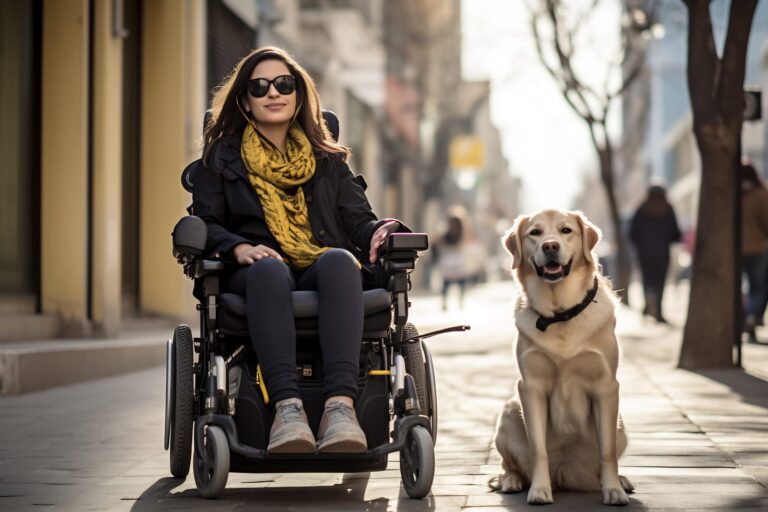
The difference is who the dog works for. A service dog works for one person and is trained to do specific tasks tied to that person’s disability. A therapy dog works with a handler to comfort and support many different people, and it has no special right to enter public places.
Under the Americans with Disabilities Act, a service animal is a dog “individually trained to do work or perform tasks” for a person with a disability, according to the U.S. Department of Justice’s service animal FAQ. That includes psychiatric service dogs, such as a dog trained to sense an oncoming anxiety attack and take a specific action to lessen it. Because of that training, a service dog can go into stores, restaurants, and clinics with its handler.
A therapy dog’s job is different. It is evaluated to stay calm and friendly around many people, and it goes only where it is invited: schools, hospitals, or a counselor’s office. The same DOJ guidance states that therapy dogs are not service animals under the ADA.
There are also two kinds of therapy dog work. Many therapy dogs visit with volunteer handlers to brighten someone’s day. In animal-assisted therapy, the handler is a licensed clinician, and the dog becomes part of a treatment plan with real goals.
How Is an Emotional Support Animal Different From a Service Dog?
An emotional support animal (ESA) comforts its owner simply by being there, while a service dog is trained to perform a task. The ADA is direct on this point: if a dog’s mere presence provides comfort, it is not a service animal. That one distinction explains most of the rules below.
An ESA does not need special training and can be almost any species. It usually lives with its owner and supports them at home. What it does not have is public access. Under the ADA, a business can turn away an ESA the same way it would turn away a pet.
Travel and housing rules have also changed in recent years:
- Air travel: Since the U.S. Department of Transportation’s 2020 final rule, airlines no longer have to treat emotional support animals as service animals. Airlines may treat them as pets.
- Housing: On May 22, 2026, the U.S. Department of Housing and Urban Development issued new Fair Housing Act enforcement guidance that cancels its earlier ESA guidance. Requests for trained assistance animals are treated as presumptively reasonable, while requests for untrained ESAs are no longer handled that way.
The Fair Housing Act itself has not changed, and state law and future court decisions can still affect your situation. If you have questions about an ESA and your lease, talk with a housing attorney or a fair housing organization about your specific case.
ESA documentation, when it is used, typically comes from a licensed mental health professional who knows you and your treatment history.
Therapy Dog, Service Dog, and ESA at a Glance
This quick comparison shows how the three roles line up on training, who they help, and where they are allowed.
| Category | Therapy dog | Service dog | Emotional support animal |
|---|---|---|---|
| Who it helps | Many people, with a handler | One person with a disability | One person, its owner |
| Training | Evaluated for temperament and obedience | Individually trained to perform disability-related tasks | No task training required |
| Public access under the ADA | No, only where invited | Yes, in most public places | No |
| Species | Usually dogs, sometimes other animals | Dogs (miniature horses in some cases) | Almost any species |
| Part of a therapy session | Yes, in animal-assisted therapy | No, it assists its handler | No |
What Does a Therapy Dog Actually Do in a Counseling Session?
In a counseling session, a therapy dog supports the work your therapist is already guiding. The dog is not the treatment. It is a calm presence that can make hard conversations easier to start and coping skills easier to practice.
At our practice, sessions with Dusty are led by Steffanie Naples, LCSW, C-AAIS, and built around the goals in your treatment plan. Dusty is a two-year-old Great Pyrenees and Labrador Retriever mix rescued from a local shelter in December 2025. He is certified through the Association of Animal-Assisted Intervention Professionals (AAAIP) and trained in advanced obedience and environmental desensitization.
Depending on the day, Dusty might:
- Rest quietly nearby while you talk through something difficult
- Join a mindfulness, relaxation, or grounding exercise
- Take part in a play-based activity that helps a child name feelings
- Give a teen or adult a low-pressure way to practice communication and confidence
Participation is always voluntary. You can ask Dusty to join or to leave the room at any visit, and his handler watches his body language so he gets breaks when he needs them. Parents and guardians complete a separate consent form before animal-assisted therapy begins.
Can a Therapy Dog Help With Anxiety?
For some people, yes. Time with a therapy dog during counseling can help the body settle enough to do the harder parts of therapy. The American Psychological Association has summarized research linking human-animal interaction with changes in stress response for some clients. Results vary from person to person.
It helps to separate two ideas. A therapy dog in a session supports your work with a licensed therapist, who is still using proven approaches for anxiety treatment. A psychiatric service dog is a different path: it lives with one person and is trained to perform specific tasks, such as interrupting a panic attack in public.
Animal-assisted therapy may also fit people working through grief and loss, trauma and PTSD, or children and teens building emotional regulation skills, often alongside family therapy. Whether it belongs in your plan is a clinical decision you make together with your therapist.
What Are the Service Animal Rules in Arkansas?
Arkansas follows the federal ADA definition for public places and adds its own penalty for misrepresentation. Under Arkansas Code § 20-14-310, a person may not misrepresent an animal as a service animal, or a service animal in training, to a business open to the public. Each violation can carry a civil penalty of up to $250.
In practice, this means a vest or an online registration does not turn a pet into a service dog. Under the ADA, staff at a Northwest Arkansas business may ask only two questions when the need is not obvious: whether the dog is required because of a disability, and what task it has been trained to perform. They may not ask for documentation or a demonstration.
If you are unsure where your own animal fits, that is a fair question to bring to a professional. This article is general information, not legal advice.
Which Kind of Animal Support Fits What You Need?
The right choice depends on what you want the animal to do. Use these questions as a starting point:
- Do you need help with specific tasks in daily life, including in public? A trained service dog, including a psychiatric service dog, may be the right fit. This usually involves a specialized training organization.
- Do you mainly want comfort at home? An emotional support animal, or simply a well-loved pet, may meet that need. Check your lease and current housing rules first.
- Do you want support from a dog while you work on anxiety, grief, trauma, or a child’s emotional skills in counseling? That is what animal-assisted therapy at our Rogers location is designed for.
If you fall into that third group, you do not need to own or train a dog yourself. Your therapist and Dusty bring the dog side of the work, and you bring your goals.
Frequently Asked Questions
Ask the handler first, and expect the answer to be no. A service dog is working, and petting it can pull its attention away from the task it is doing for its handler. Therapy dogs are different: comfort and gentle contact are often part of their job, though a good handler still watches for signs the dog needs a break.
Possibly. Friendly, well-mannered dogs can be evaluated for therapy work through a therapy animal organization. Volunteer teams visit places like schools and hospitals. A dog used in animal-assisted therapy goes further: its handler is a licensed professional, and the pair is evaluated for work in a clinical setting.
Animal-assisted therapy at our practice is optional. Traditional talk therapy is always available, and Dusty never joins a session without consent at that visit. Your therapist will talk through whether animal-assisted therapy is a good fit during the intake appointment.
No. In-person animal-assisted therapy is offered only at our Rogers office on W. Walsh Lane. We serve clients throughout Northwest Arkansas, including Fayetteville, Bentonville, and Springdale, and clients from any of those areas can request sessions at the Rogers office.
Start Counseling With Dusty in Rogers
If you think a calm, certified therapy dog could make counseling easier for you or your child, our team can help you find out. Request an appointment and mention animal-assisted therapy, or call us at (479) 443-5575.